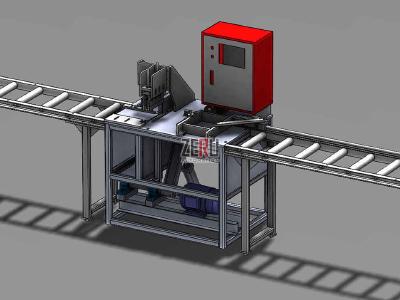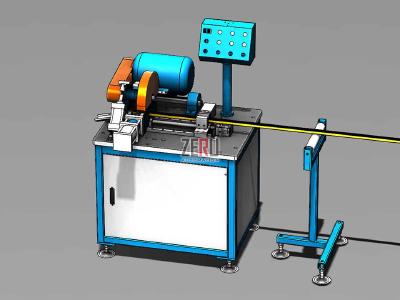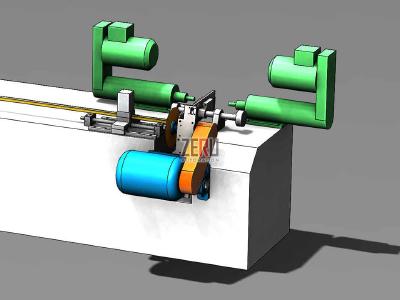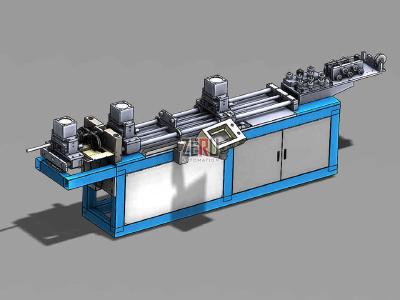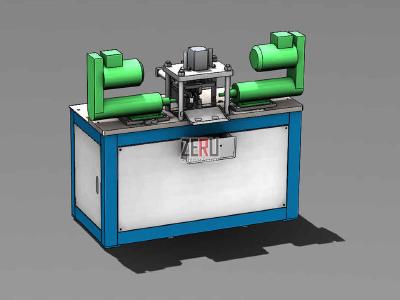
Metal tube (bar) cutting machine, also known as cutting machine or blanking machine, its main function is to cut long straight pipes or coiled pipes into the length required for processing. If it is coiled pipe (coil material), it also needs to be straightened before cutting. There are two common ways: saw blade cutting and chipless cutting.
After general cutting is completed, the end of the metal pipe fitting needs to be subjected to routine chip cutting and polishing, such as chamfering and deburring.
Fully Automatic Saw Blade Cutting Machine
Uses high-speed steel or alloy saw blades.
Pros:
- Simple structure, easy operation and maintenance
- Fast cutting speed, high efficiency
- Ideally flat cut, accurate length
Cons:
- There are burrs and dust of different sizes at the cut, which requires deburring and cleaning
- There are many dust chips, resulting in large loss of raw materials
Fully Automatic Chipless Cutting Machine
Uses a ring blade to roll the pipe wall to cut off.
Pros:
- Very little dust, no burrs at the cut
- Saves raw materials
Cons:
- The cut is not very flat, and there is a certain degree of concavity, affecting the size of the pipe diameter
- Debugging is complicated, and the cutter needs to be replaced frequently to keep it sharp
Fully Automatic Chamfering Machine
Uses a cutter to rotate and cut the inner angle, outer angle, and end face of the pipe fitting to ensure the flatness and aesthetics of the pipe end. The cutting of the end face also serves to calibrate the length of the pipe fitting. There are two chamfering methods: cutter head rotation or pipe fitting rotation.
Fully Automatic Deburring Machine
Uses physical methods such as wire brush friction or sand grinding to remove burrs at the end of the pipe fitting to ensure the flatness and aesthetics of the pipe end.