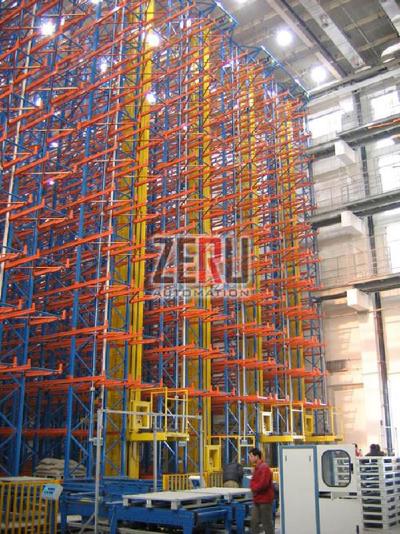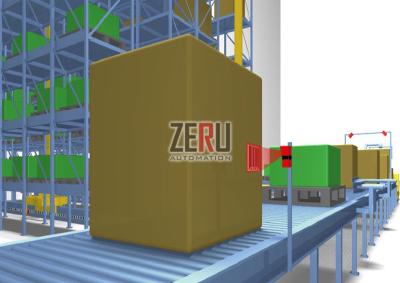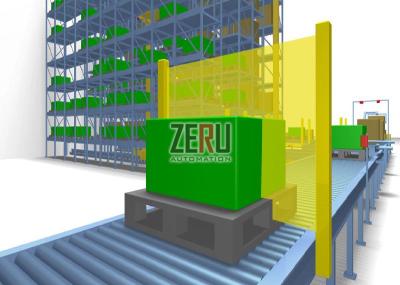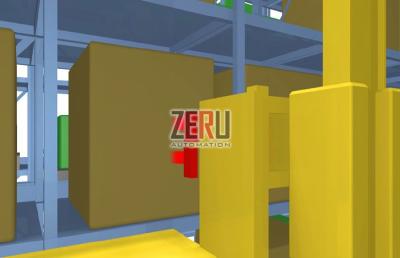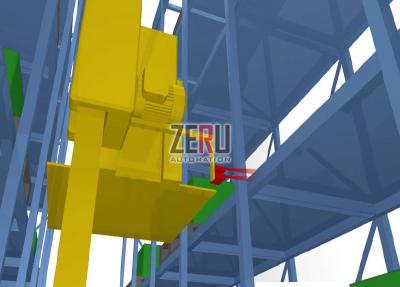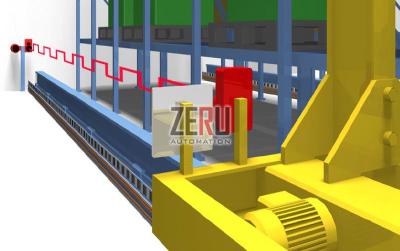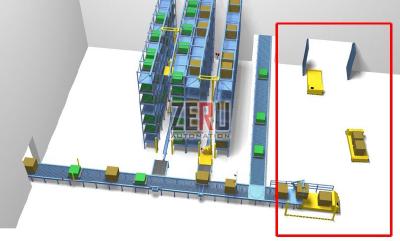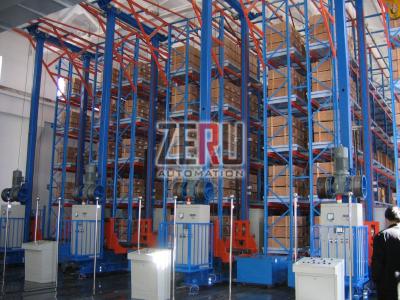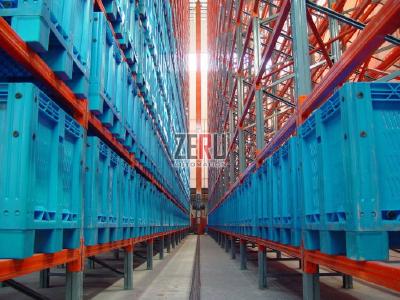
Automated Stereoscopic Warehouse (AS/RS), also known as high-bay warehouse, generally refers to a warehouse that uses shelves usually several, a dozen, or even dozens of layers high to store unit goods and uses corresponding material handling equipment for warehousing and outbound operations. Because this type of warehouse can fully utilize space to store goods, it is often vividly referred to as a “stereoscopic warehouse”.
I. Overview of Automated Stereoscopic Warehouse
Traditional warehouses have various problems such as large footprint, long cargo access time, low labor efficiency, high labor costs, and low inventory accuracy. AS/RS is a new type of modern warehouse that uses high-rise shelves and railway stacker cranes, cooperating with a variety of peripheral equipment to achieve automatic access and cargo management. Using computer control and management technology allows the functions of the stereoscopic warehouse to be maximized, providing companies with a complete logistics automation solution ranging from storage, automated transportation, automated production to finished product distribution.
II. System Characteristics
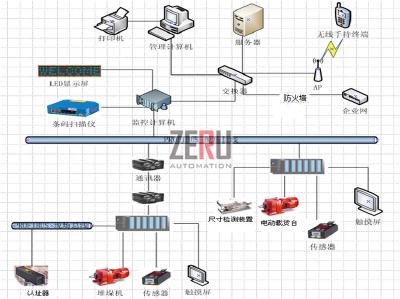
AS/RS is a revolutionary achievement of logistics technology. It can complete the automatic access of unit goods under the control of a computer system. It utilizes the collaboration of automated storage equipment and computer management systems to achieve high-level rationalization of stereoscopic warehouses. Combined with different types of warehouse management software, graphic monitoring and scheduling software, barcode identification and tracking systems, handling robots, AGV trucks, cargo sorting systems, stacker crane addressing systems, stacker crane control systems, cargo location detectors, etc., it constitutes a complete modern stereoscopic warehouse management system. Compared with traditional warehouses, it has the following advantages:
- Improve space utilization, reduce storage land, and save land investment costs.
- Facilitate the formation of advanced logistics systems and improve enterprise production management levels.
- Accelerate the rhythm of cargo access and improve production efficiency.
- Reduce labor intensity, improve workers’ working environment, and reduce labor costs.
- Reduce inventory capital backlog.
- Facilitate the realization of overall system optimization and improve production and logistics management levels.
- It is an important symbol of modern enterprises.
- Realize all-round real-time management of storage materials during the transfer process.
- Adopt automated/semi-automated identification methods to improve the accuracy and operational efficiency of inventory checking.
- Establish a unified asset database to provide a reliable basis for the entire supervision of assets.
III. System Composition
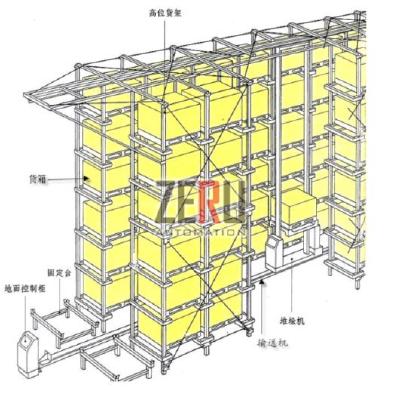
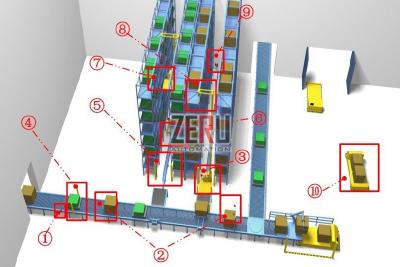
The automated stereoscopic warehouse is specifically composed of the following parts:
- High-rise Shelves: Steel structures used to store goods. Currently, there are mainly two basic forms: welded shelves and assembled shelves.
- Pallets (Bins): Appliances used to carry goods, also known as station appliances.
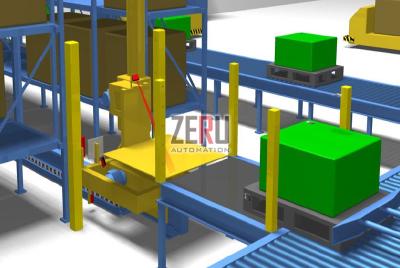
- Stacker Crane: Equipment used for automatic access to goods. It can be divided into single-column and double-column by structure; or straight, curved, and transfer by service mode.
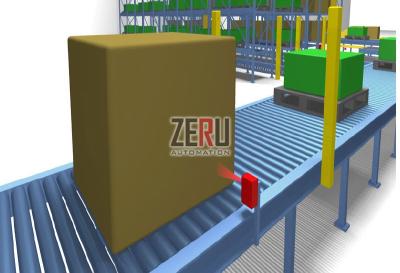
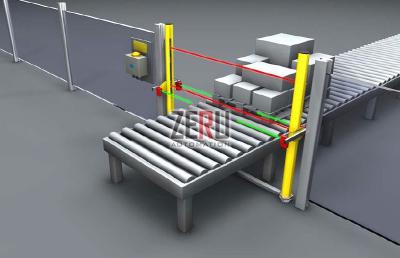
- Conveyor System: The main peripheral equipment of the stereoscopic warehouse, responsible for transporting goods to the stacker crane or moving goods away from the stacker crane. Types include roller conveyors, chain conveyors, lifting tables, distribution vehicles, hoists, belt conveyors, etc.
- AGV System: Automated Guided Vehicle system. Divided into induction guided trolley and laser guided trolley according to the guiding method.
- Automatic Control System: The automatic control system that drives the various equipment of the automated stereoscopic warehouse system. Currently, the control mode based on fieldbus is mainly adopted.
- Inventory Information Management System (WMS): The core of the fully automated stereoscopic warehouse system, which can be networked with other systems (such as ERP systems) or integrated.