Automated Stereoscopic Warehouse (AS/RS)
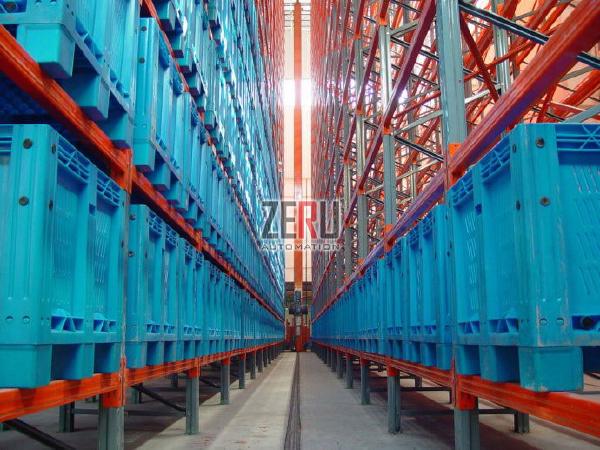
Automated Stereoscopic Warehouse (AS/RS), also known as high-bay warehouse, generally refers to a warehouse that uses shelves usually several, a dozen, or even dozens of layers high to store unit goods and uses corresponding material handling equipment for warehousing and outbound operations. Because this type of warehouse can fully utilize space to store goods, it is often vividly referred to as a “stereoscopic warehouse”.
I. Overview of Automated Stereoscopic Warehouse Traditional warehouses have various problems such as large footprint, long cargo access time, low labor efficiency, high labor costs, and low inventory accuracy. AS/RS is a new type of modern warehouse that uses high-rise shelves and railway stacker cranes, cooperating with a variety of peripheral equipment to achieve automatic access and cargo management. Using computer control and management technology allows the functions of the stereoscopic warehouse to be maximized, providing companies with a complete logistics automation solution ranging from storage, automated transportation, automated production to finished product distribution.
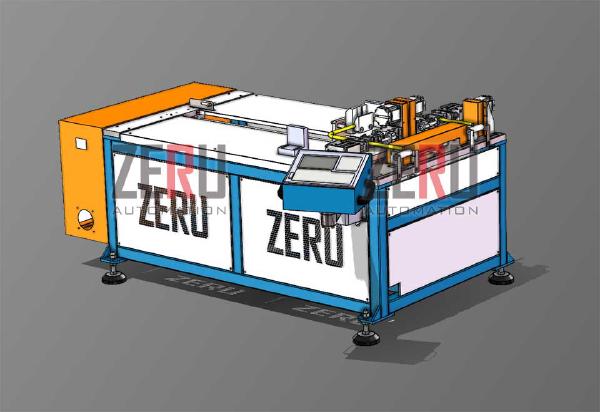
Fully Automatic U-shaped Pipe Double-head Drilling Machine
Suitable for simultaneous drilling on both sides of U-shaped metal pipe fittings, using servo positioning, dual power head design, precise positioning, high efficiency, and simple maintenance.
Main Parameters Parameter Value Processing Material Stainless steel pipe, copper pipe, aluminum pipe Max Processing Pipe Diameter (mm) Φ20 Max Processing Size (U-shaped plane mm) 1200x600 Operation Mode Auto/Manual/Jog
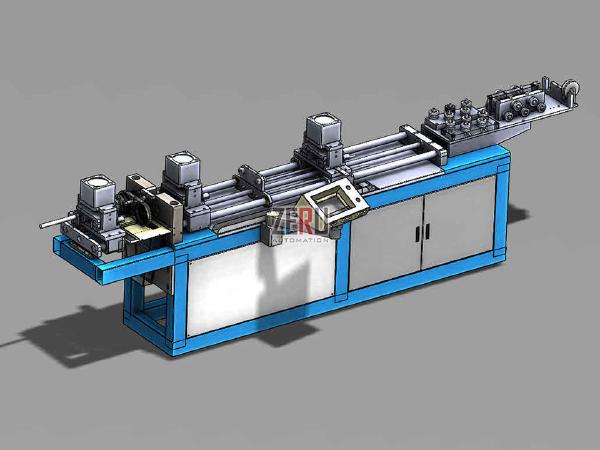
Metal Tube (Bar) Cutting and Chamfering Equipment
Metal tube (bar) cutting machine, also known as cutting machine or blanking machine, its main function is to cut long straight pipes or coiled pipes into the length required for processing. If it is coiled pipe (coil material), it also needs to be straightened before cutting. There are two common ways: saw blade cutting and chipless cutting.
After general cutting is completed, the end of the metal pipe fitting needs to be subjected to routine chip cutting and polishing, such as chamfering and deburring.
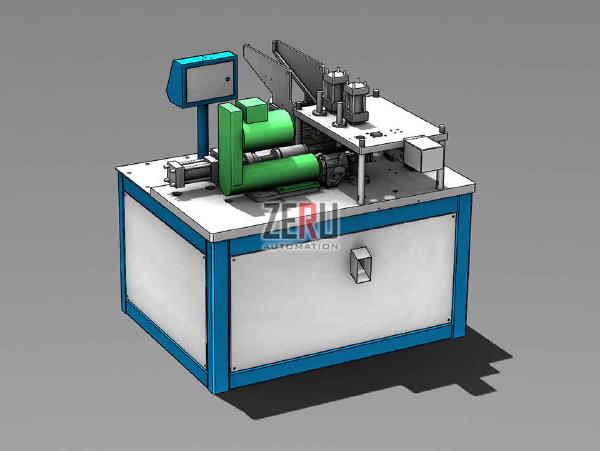
Metal Tube End Forming Equipment
Using molds to change the size or shape of the metal pipe end. Common types include: flaring machine, shrinking machine, heading machine, sealing machine, etc. According to the station, it can be divided into single-station pipe end machine, double-station pipe end machine, and multi-station pipe end machine. Among them, the multi-station pipe end machine can be divided into single-clamp multi-punch, multi-clamp single-punch, and multi-clamp multi-punch types.
Fully Automatic Flaring (Shrinking) Machine There are two types: cold forging or hot spinning. Cold forging is efficient, but workpieces with large deformation rates require multiple processing. Hot spinning is suitable for cases with large deformation rates and can be formed in one go.
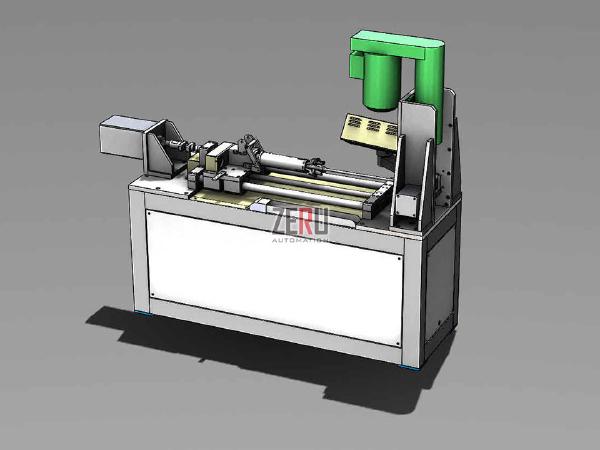
Pipe Bending and Drilling Equipment
Using molds, cutters, etc. to process metal pipe fittings, such as bending machines, punching machines, drilling machines, dotting machines, knurling machines, etc.
Fully Automatic Bending Machine Bending pipe fittings according to predetermined arcs and angles. Common ones include manual bending machines, hydraulic bending machines, and 3D CNC bending machines.
Punching Machine Using molds to punch holes in the pipe wall. According to the drawing requirements, holes of the required size and shape can be punched from outside to inside or from inside to outside, and flanging effects can also be formed to facilitate subsequent welding.
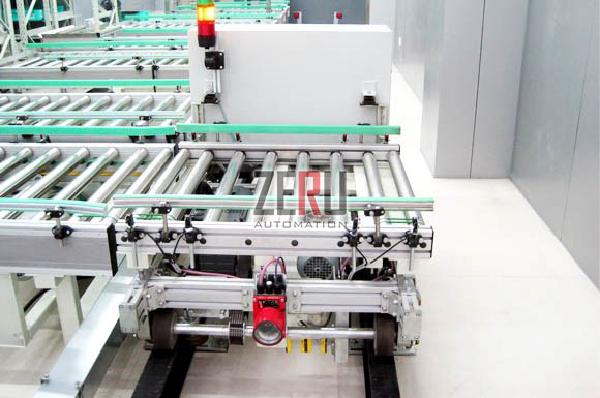
Rail Guided Vehicle (RGV)
Rail Guided Vehicle (RGV), as an intelligent rail-guided handling device in automated logistics systems, can achieve high-speed and efficient flat automatic positioning of unit materials, with a high degree of automation and flexibility.
RGV has the function of dynamic transfer along a fixed path, realizing the transfer of materials between different workstations, making the equipment layout of the automated conveyor system more compact and simple, and improving the material conveying efficiency. It is increasingly widely used in automated logistics systems. According to the rail form, RGV can be divided into reciprocating straight RGVs and circular RGVs.
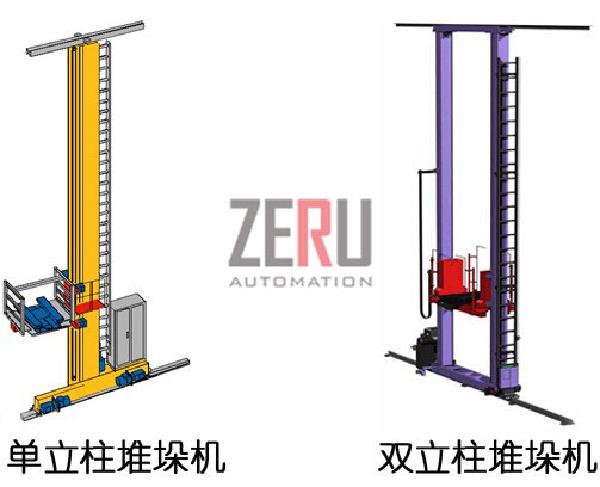
Stacker Crane
The stacker crane is the access equipment in the automated stereoscopic warehouse. It is generally divided into single-column and double-column structures. The operation requirements are completed by three drive mechanisms: traveling, lifting and forking. It adopts internationally advanced variable frequency control systems and absolute addressing systems for fully closed-loop control, cooperating with high-precision addressing methods such as barcodes or laser ranging to achieve high-precision operation of the stacker crane. According to the structure, it is divided into single-column stacker cranes and double-column stacker cranes.
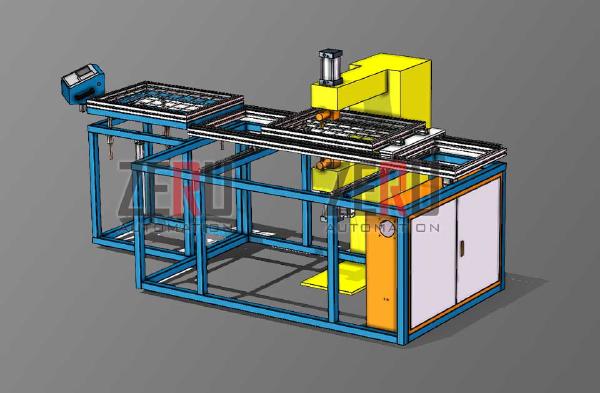
XY Axis Dual-Mode Auto Spot Welding Machine
This equipment is suitable for automatic welding processing of metal mesh sheets.
Equipment Characteristics Simplify the difficulty of worker operation, no need for professional welder operation. Workers only need to arrange workpiece to the fixture. Adopting double mold (double fixture) lifting design, only one person is required to operate. While the worker is arranging materials, the welding machine automatically welds, carrying out synchronously without affecting each other. Compared with manual welding, production efficiency is doubled. X and Y axis servo precise positioning, double cylinder driven electrodes, fast and stable, improving welding quality. No need for manual direct operation of the welding machine, improving production safety and greatly reducing safety production accidents. Can cooperate with existing welding machines, use them together after transformation, reducing investment costs. Main Parameters Parameter Value Processing Material Metal Mesh Sheet Max Processing Size (mm) 1000x600 Drive Mode CNC + Pneumatic Operation Mode Auto/Manual/Jog